

Counterfeit Inputs and Farmer Confidence: Why Awareness, Traceability, and Authorized Channels Matter
Every season, thousands of farmers across India pour their savings, their time, and their trust into a bag of seeds, a bottle of pesticide and a sack of fertilizer. They do everything properly, such as preparing the soil, following the schedule, and managing the water. And yet, sometimes, the harvest disappoints. Not because of the weather, or of skill. But because what was in that bag wasn't what it claimed to be.
What exactly are "Counterfeit Inputs"?
Counterfeit agricultural inputs are one of the most silent and damaging threats facing Indian farmers today. They don't announce themselves. They look legitimate, they're sold at the right price, and by the time you know something went wrong, an entire season is lost. A false input could be a pesticide with less active ingredient than required, a seed that isn't true-to-variety, or a fertilizer mixed with cheaper fillers. These products often enter the supply chain through unauthorized dealers or informal markets, and the farmer standing at the end of this chain has no easy way to tell the difference.
Awareness, Traceability, and Authorized Channels Matter
Three things can protect farmers from this silent threat: awareness, traceability, and authorized channels. Awareness means knowing what a legitimate product looks like (a proper label, a valid batch number, an expiry date, a manufacturer's address, and a license number). Counterfeiters almost always cut corners on these.
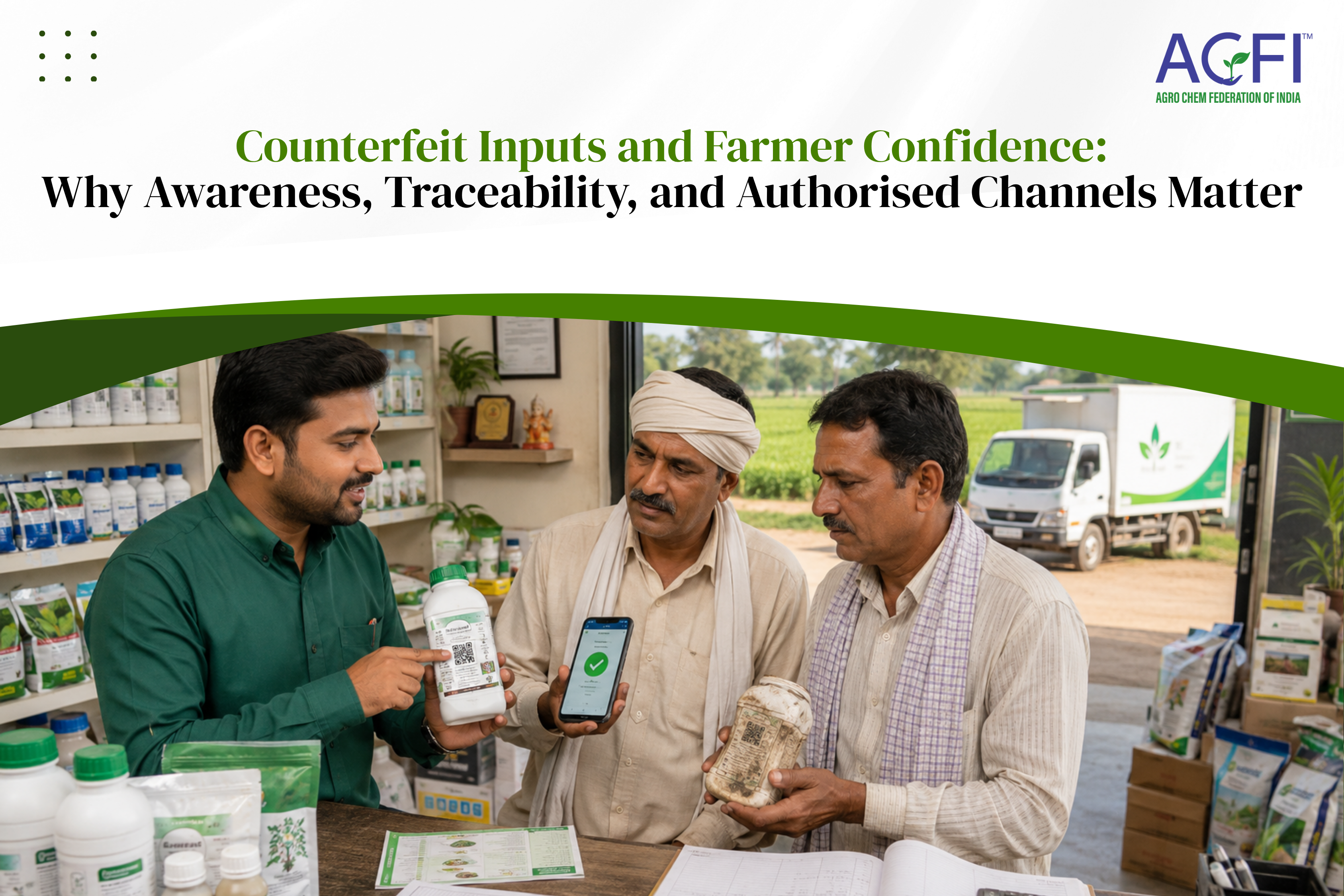
Traceability means being able to follow a product back to its source. The industry is increasingly moving toward QR codes and digital tracking, so a farmer can scan a code and confirm exactly where a product came from and whether it's cleared for use. Authorized channels mean buying only from licensed dealers who can provide a proper receipt.
Trust in the Agri-input ecosystem
The deeper issue here is trust. When a farmer uses a genuine product, and it works, they build confidence in the product, the company, and the system. When a counterfeit product fails them, they lose not just a season but faith in the entire ecosystem. Companies that invest in quality assurance and transparent supply chains are building something bigger than a sale. They're building a relationship with the farmer. For farmers, the ask is simple: to be a little demanding, asking their dealer for a license, a receipt, or a product verification number. Farmers’ land and their livelihoods deserve inputs that are exactly what they claim to be.
A good harvest is the result of many right decisions, and choosing the right inputs is one of the most important. Protecting farmers from counterfeit products is not just a regulatory responsibility; it is a shared commitment between manufacturers, dealers, and the farming community. When every link in the supply chain upholds that commitment, farmer confidence grows, and with it, the foundation for a stronger, more resilient agricultural future strengthens as well.