

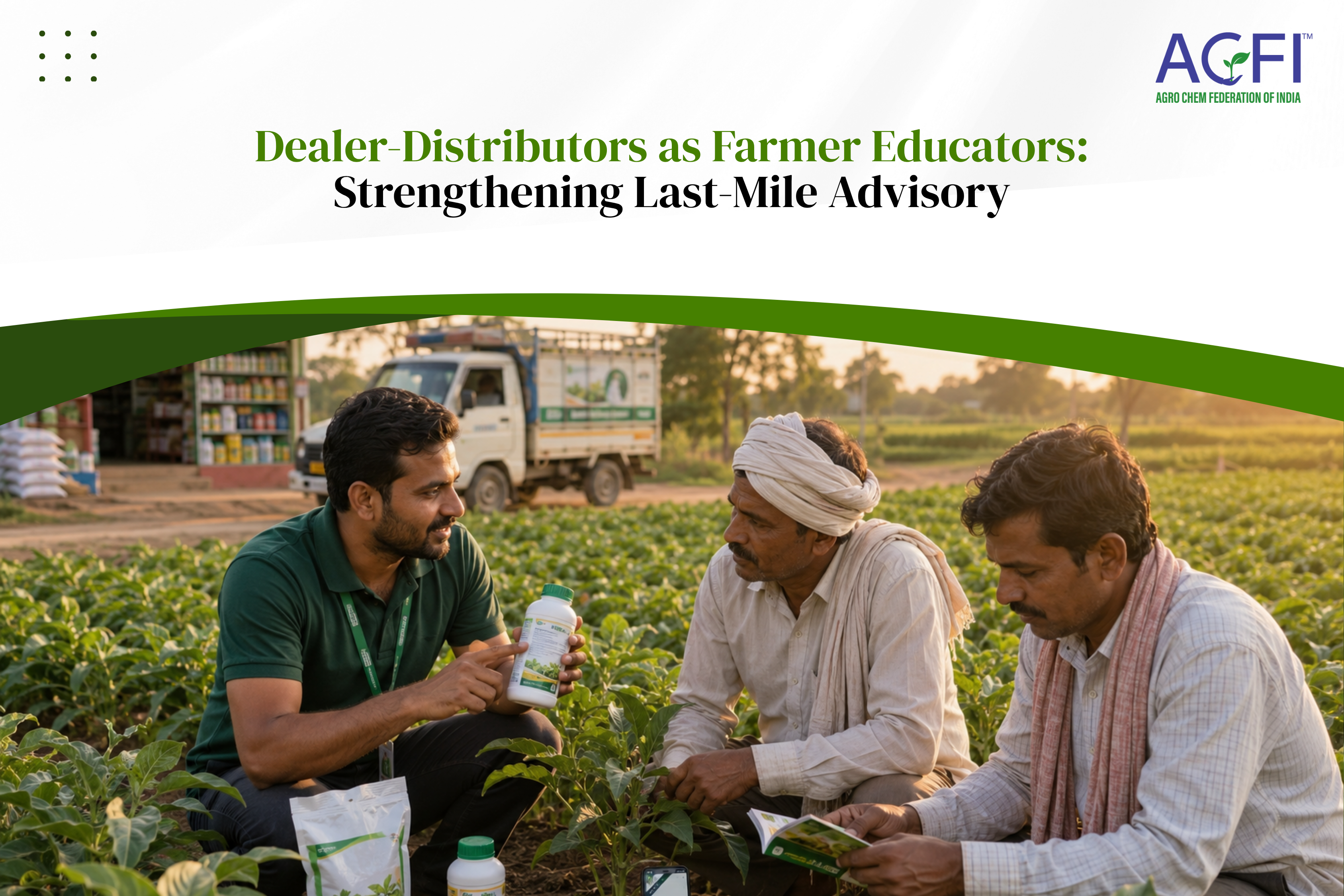
Dealer-Distributors as Farmer Educators: Strengthening Last-Mile Advisory
Dealers and distributors are the friendly face farmers seek first when they need seeds, fertilizers, or advice, as they live in the neighborhood and understand local farms; the dealers can do more than sell products. They can teach practical skills that help farmers achieve better harvests and adopt good agricultural practices. When dealers explain simple science in everyday language, farmers make smarter choices that improve yields, reduce risks, and protect income.
Why dealer education matters
Farmers usually prefer advice from people they trust and meet regularly. A local dealer knows the soil, weather, labor limits, and money cycles of the village. That makes their guidance realistic and useful. Instead of complicated jargon, farmers need short, clear directions they can use the same day, that is, what to mix, how much to spray, when to water, and how long to wait before harvest. Good advice from a dealer prevents mistakes that can cost time and money.
Simple, practical advice for farmers
Farmers act on tips they can see and try. Dealers who show farmers how to read a label, measure doses, or calibrate a sprayer help them avoid overuse or incorrect mixes. Explaining things with local examples, like showing how excess nitrogen can make mango trees produce more leaves but fewer fruits, makes science relatable. A quick demonstration, a short evening talk after work, or a one-page sheet in the local language goes a long way.
From lab data to farm practice
Soil tests and pest-monitoring reports matter only if they lead to simple actions. Dealers can translate those results into a clear plan: which fertiliser blend to buy this season, when to apply a foliar feed, or when to set traps rather than spray. They can also collect farmers’ feedback on what worked and what didn’t, and share it with manufacturers or extension workers, so that recommendations better suit local farms.
Protecting Farmers from Fake or Wrong Products
Dealing with fake or poor-quality inputs is a real worry for farmers. Dealers who source authorized products, store them properly, and show buyers how to check packaging protect farmers’ money and crops. Teaching farmers to look for registration numbers, expiry dates, or QR codes helps them avoid counterfeit goods. Simple trust-building steps, like providing a receipt with batch details, also help when problems need to be resolved.
When dealers teach well, farmers get steadier, safer harvests and better prices. Dealers keep loyal customers and face fewer complaints. Manufacturers see their products used correctly, and buyers receive safer, higher-quality crops. Over time, the whole village sees higher incomes and fewer crop losses, ultimately leading to a stronger local market.
Strengthening dealers with training and tools
Dealers need simple tools and occasional training: short product briefings, demo kits, printed leaflets in local languages, and basic agronomy tips. Small rewards or recognition for dealers who run farmer sessions encourage more to join in. When manufacturers and extension services back dealers with practical resources, the whole advisory network grows stronger.
Conclusion
Dealers and distributors are more than shopkeepers; they are trusted fellows who can turn technical advice into everyday practice. By teaching clearly, promoting genuine products, and helping farmers with hands-on steps, dealers strengthen last-mile advisory in a way that feels practical, local, and trustworthy. Investing in dealer training and simple communication tools delivers clear benefits for farmers, dealers, and the wider community.