

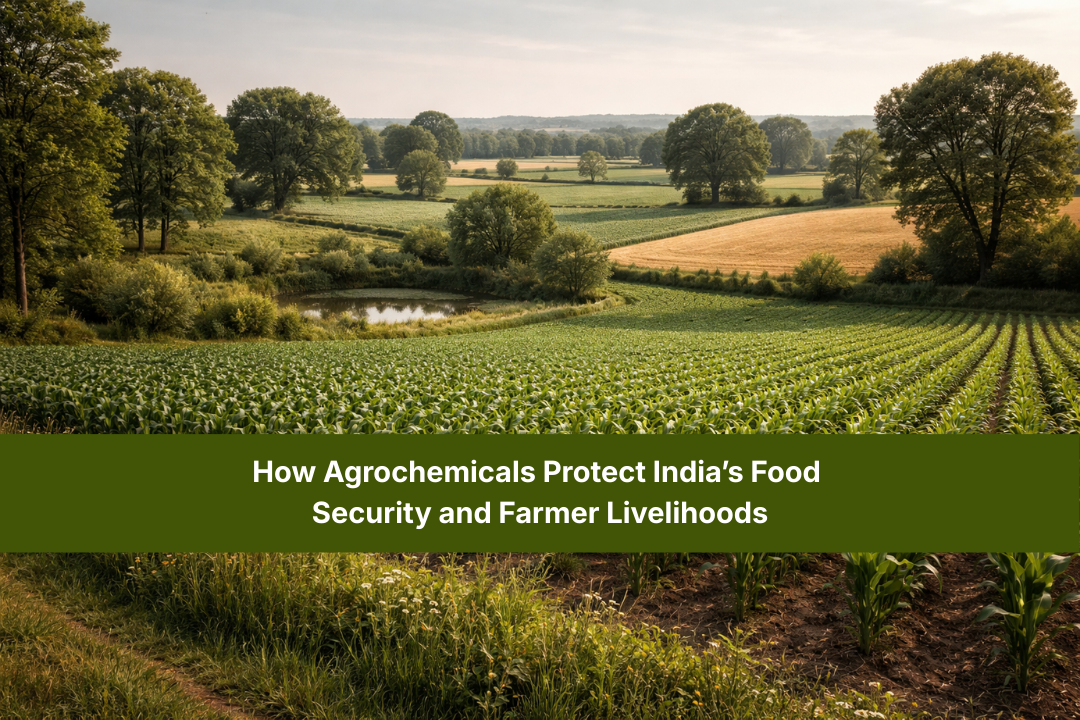
How Agrochemicals Protect India’s Food Security and Farmer Livelihoods
Why Agrochemicals Matter for Food Security
Food security means making sure that every person has reliable access to enough safe, nutritious
and affordable food throughout the year. Agrochemicals help achieve this by improving crop
health and yields. Without proper crop protection, India could lose 15-25% of its food crops to
pests, diseases and weeds. Fertilizers supply essential nutrients like nitrogen, phosphorus and
potassium that many Indian soils lack, helping crops grow strong and healthy. Crop protection
chemicals save plants from harmful insects and diseases and keep weeds under control, ensuring
more food reaches our tables.
Thanks to the strategic use of agrochemicals, India transformed from a food-deficient nation to a
self-sufficient powerhouse in staple crops like rice and wheat. Today, India’s agrochemical
industry is valued at over 11 billion USD and continues to grow steadily, driven by rising
demand across key agricultural sectors including rice, wheat, sugarcane, fruits and vegetables.
This remarkable growth underlines the crucial role that agrochemicals play in ensuring the
country’s food security and supporting the livelihoods of millions of farmers.
Supporting Farmer’s Livelihoods
Farming in India requires heavy investment in seeds, labor, irrigation and machines before any
harvest. A sudden pest attack or disease outbreak can wipe out a farmer’s entire income.
Agrochemicals act as an insurance, helping farmers protect their crops and reduce losses. By
controlling pests and diseases effectively, farmers can produce better-quality crops that fetch
higher prices in the market.
Moreover, agrochemicals help stabilize farm production, giving farmers confidence to adopt new
technologies and improve productivity. This reduces the risks associated with farming and
improves their livelihoods.
Balancing Productivity with Safety
While agrochemicals are crucial, their use must be balanced with safety for people and the
environment. India is actively working to replace older, hazardous chemicals with safer, low-
dose and bio-based alternatives that are less harmful to soil, water and non-target species. Safe
use practices and regulations promote responsible application, protecting farmers, consumers and
ecosystems.
Integrated Pest Management (IPM) is also gaining popularity. It combines agrochemicals with
natural pest controls, crop rotation and other sustainable methods to reduce chemical reliance
while maintaining crop health. This approach supports a greener and safer agricultural future.
The Road Ahead for Indian Agriculture
India’s food demand will continue to grow due to population increase and changes in diets. To
meet this demand, farmers must produce more with less land and water. This requires smarter
use of agrochemicals, using the right product, in the right amount, at the right time, guided by
science and technology.
Digital tools like mobile apps, drones and sensors are helping Indian farmers use agrochemicals
more precisely, reducing waste and environmental impact. Government support through
subsidies, training programs and safer product approvals strengthens this transformation.
Conclusion
Agrochemicals are a vital tool in India’s journey towards food security and improved farmer
incomes. When used responsibly, they help produce more food safely and protect farmer’s
livelihoods. The future of Indian agriculture depends on adopting smarter, safer and sustainable
agrochemical use to nourish people today and preserve the earth for the generations to come.