

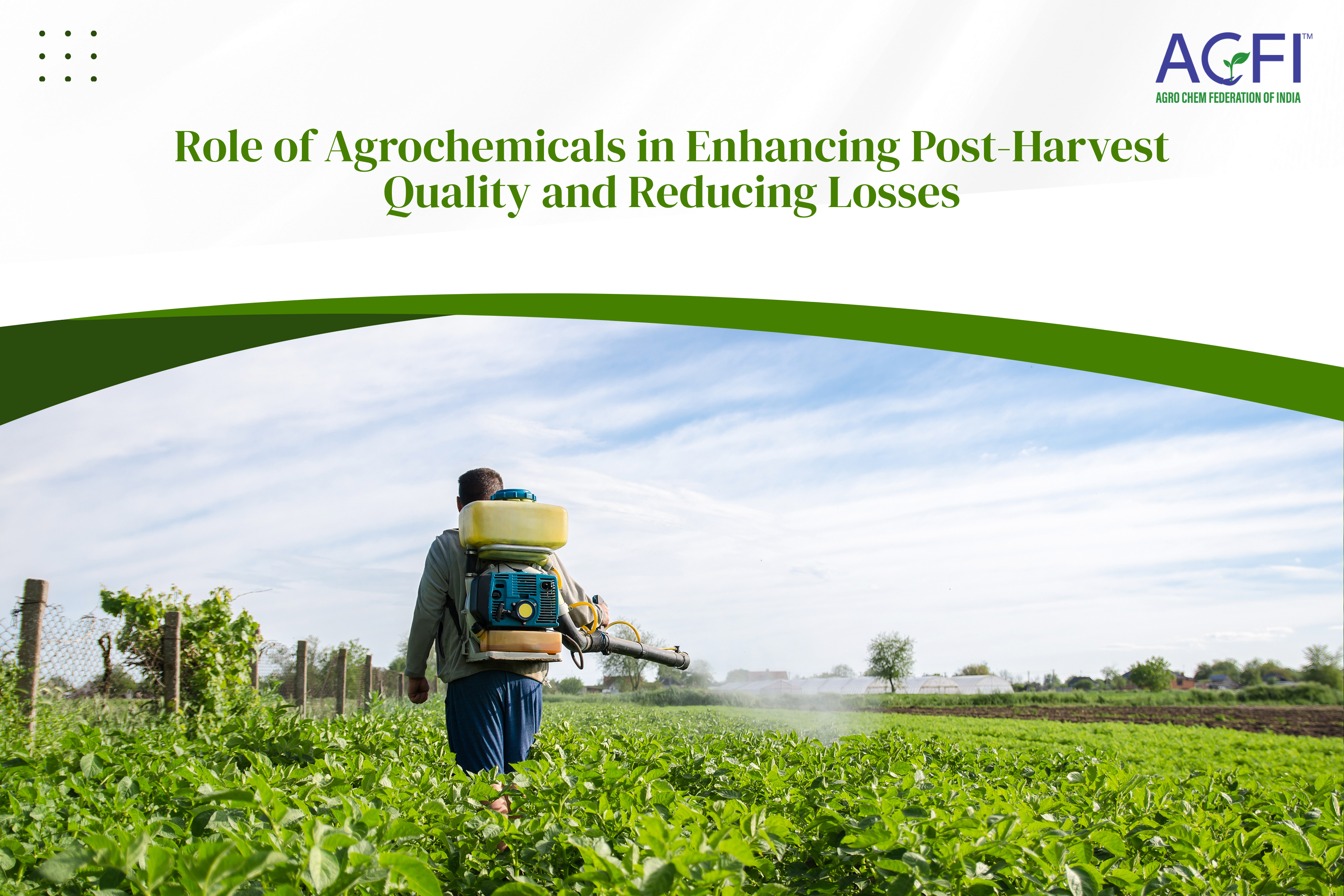
Role of Agrochemicals in Enhancing Post-Harvest Quality and Reducing Losses
India's post-harvest losses, estimated at 20-40% of production, valued at over ₹1 lakh crore annually, erode farmer incomes and strain food security, often due to pests, pathogens, and suboptimal storage. Agrochemicals play a pivotal role in mitigation, offering targeted protectants that extend shelf life, maintain quality and minimise waste when integrated judiciously with best practices.
Strategic Agrochemical Applications
Post-harvest agrochemicals focus on precision interventions at critical stages. For instance, fungicides such as mancozeb or carbendazim, applied as dips or sprays, effectively control storage rots in potatoes and onions, reducing decay by 30-50%. Insecticides such as malathion and imidacloprid safeguard grains against weevils and moths in silos, while fumigants such as phosphine ensure residue-free treatment through proper aeration.
Plant growth regulators, including ethylene inhibitors such as 1-MCP, slow fruit ripening in mangoes and bananas, preserving firmness and flavour during transit. Bio-based options like neem extracts and Bacillus thuringiensis provide eco-friendly alternatives for spices and vegetables, aligning with export MRL standards.
Field evidence from FPOs demonstrates 15-25% gains in quality retention, with uniform colour and reduced bruising fetching premium mandi prices.
Integration with Supportive Practices
Effective use combines agrochemicals with cultural methods: ventilated crates prevent moisture buildup, zero-energy cool chambers maintain 10-15°C for perishables, and hermetic bags block oxygen to control pests. Digital forecasting apps guide application timing to avoid overuse amid humidity spikes.
Challenges include residual risks from improper dosing and the prevalence of counterfeit products in rural supply chains. Extension training through KVKs, QR-coded labels, and subsidies for coated storage aids address these, thereby promoting safe stewardship.
Conclusion
Agrochemicals elevate post-harvest management from reactive to proactive, dropping losses and enhancing market value for India's marginal farmers. When harmonised with infrastructure and training, they ensure nutritious produce reaches consumers efficiently, fortifying the agricultural value chain for sustainable prosperity.