

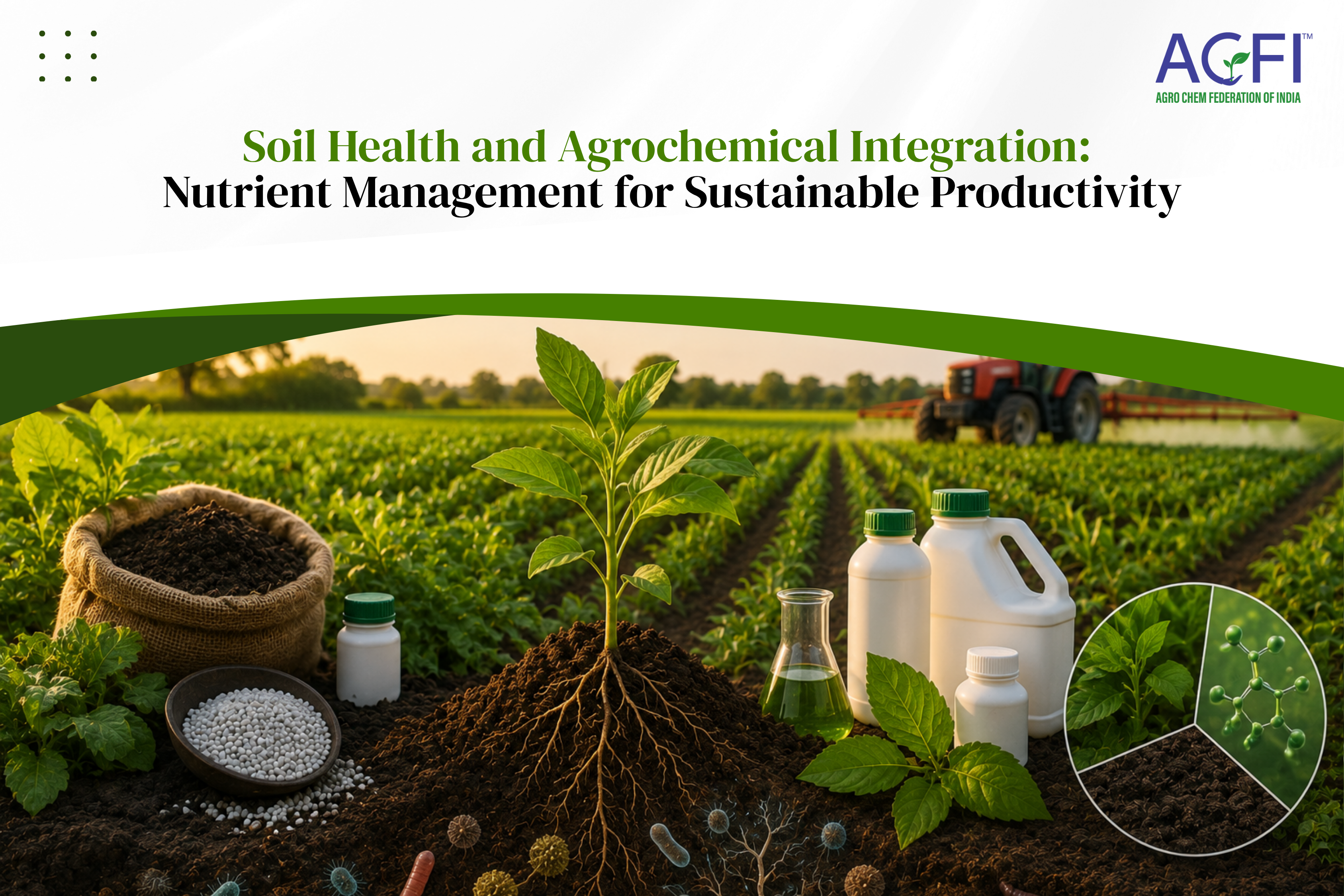
Soil Health and Agrochemical Integration: Nutrient Management for Sustainable Productivity
India's agricultural backbone rests on its soils, yet 30% of arable land faces degradation from nutrient imbalances, erosion and overuse, jeopardising yields for millions of farmers. Integrated Nutrient Management (INM) strategically combines agrochemicals with organic inputs to restore soil vitality and ensure long-term productivity in a climate-stressed era.
Proven INM Strategies
INM adheres to the 4R principle: right source, rate, time, and placement, starting with Soil Test Crop Response (STCR) analysis for tailored recommendations. Farmers apply balanced NPK fertilisers alongside farmyard manure or biofertilizers to enhance microbial activity and nutrient availability. Crop rotations with legumes naturally fix atmospheric nitrogen, while conservation tillage and cover crops prevent erosion and build organic matter.
Controlled-release agrochemicals minimise leaching during monsoons, raising nitrogen use efficiency from 30-50% to over 60%. Integrated Pest Management complements this by limiting disruptions to soil biology, fostering earthworms and beneficial fungi that are essential for decomposition.
Field studies confirm INM sustains rice-wheat yields 15-20% higher over the years, increasing soil organic carbon and water retention.
Tangible Outcomes
Marginal farmers cut input costs by 10-15%, with resilient soils buffering against droughts and floods, which are critical after recent erratic weather patterns. Residue-free harvests command market premiums, bolstering incomes and food safety. Digital tools such as soil health cards and drone applications democratise precision, even in rainfed regions.
Conclusion
Conclusively, INM turns agrochemicals into sustainability enablers, replacing soil depletion with regenerative nutrient management. By promoting balanced nutrient stewardship, it empowers India's farmers with healthier lands, higher yields and a greener future. Widespread adoption through extension services will secure enduring agricultural prosperity.