

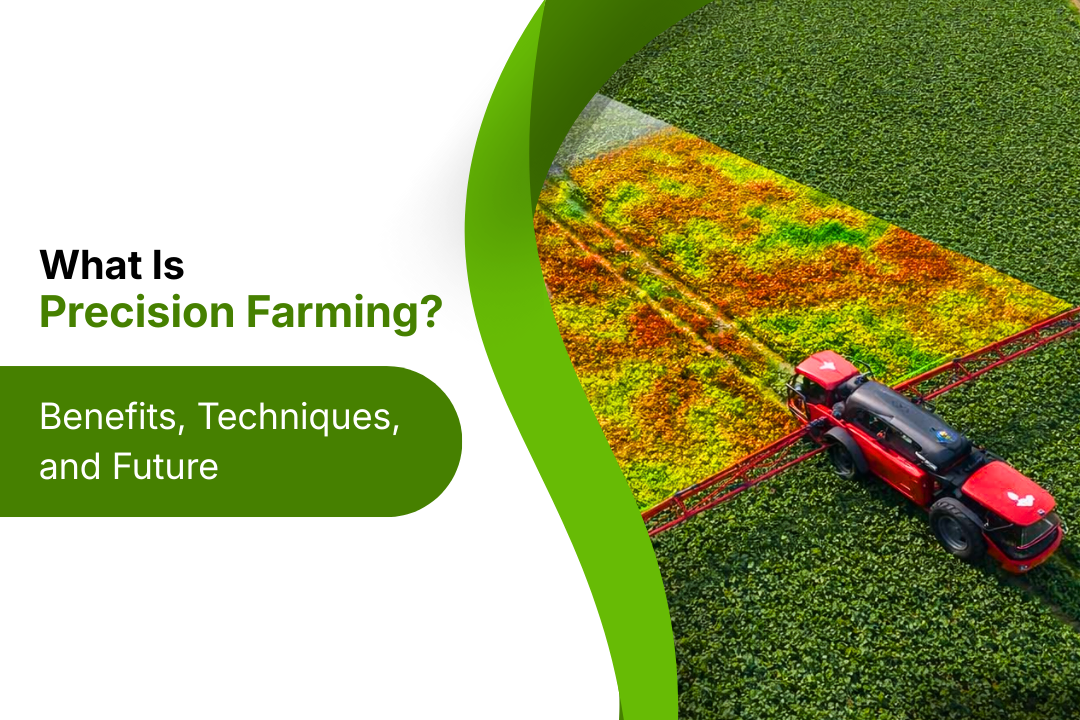
What Is Precision Farming? Benefits, Techniques, and Future
What Is Precision Farming?
Precision farming, also known as precision agriculture, is an advanced farming technique that
uses technology to monitor and manage the variability of field conditions in order to optimize
crop production and increase efficiency. It integrates various technologies such as GPS (Global Positioning System), IoT (Internet of Things), sensors, drones, satellite imaging, and data analytics to enable farmers to make more informed decisions about the management of their farms. Precision farming aims to provide the right amount of input (water, nutrients, pesticides) to the right part of the field at the right time, thereby maximizing productivity while minimizing waste and environmental impact.
Benefits of Precision Farming:
1. Increased Efficiency Precision farming enables farmers to apply resources like water,
fertilizers, and pesticides more efficiently. By using sensors and GPS technology, farmers
can track field conditions in real time, ensuring that inputs are only applied where
needed. This reduces overuse and wastage, leading to a significant decrease in
operational costs and resource consumption.
2. Higher Crop Yields By managing the variable conditions within a field, precision farming
allows farmers to cater to the specific needs of different parts of the field. This approach
can improve crop yields as plants receive optimal care in terms of water, nutrients, and
pest management. The use of advanced data analytics helps in identifying factors that
influence crop growth, enabling timely interventions to address issues before they
become problems.
3. Sustainability Precision farming is an environmentally friendly approach as it reduces the
use of chemicals and minimizes the environmental impact of farming practices. For
example, precise pesticide application means fewer chemicals are sprayed, which helps
protect surrounding ecosystems and reduces the risk of pesticide resistance.
Additionally, optimized irrigation techniques help conserve water, a vital resource.
4. Cost Reduction By targeting inputs to where they are needed most, precision farming
helps farmers reduce the cost of fertilizers, pesticides, and water. For instance, variable-
rate technology allows farmers to apply fertilizers in varying amounts according to the
specific needs of each area within a field, thus avoiding unnecessary excess. As a result,
farmers can see a significant reduction in input costs.
5. Data-Driven Decisions With precision farming, farmers can collect a vast amount of data
on soil health, crop growth, weather patterns, and more. This data can be analyzed to
make better decisions and improve farm management practices. From predicting
harvest times to detecting pest infestations early, precision farming enables farmers to
make more informed and timely decisions, leading to better outcomes.
Techniques Used in Precision Farming:
1. GPS and GIS (Geographical Information Systems) GPS technology allows farmers to map
their fields with high precision, enabling them to monitor crop conditions in different
areas. GIS helps analyze this spatial data to make decisions on where to apply resources
more effectively.
2. Variable Rate Technology (VRT) VRT allows farmers to apply varying amounts of inputs
like fertilizers or water based on the specific requirements of different areas of a field. It
helps optimize resource use by adjusting the rate of application in real time.
3. Drones and Remote Sensing Drones equipped with cameras and sensors can capture
detailed images of crops and monitor plant health from the air. Remote sensing
technology, including satellite imagery, can detect changes in plant health, soil moisture
levels, and nutrient deficiencies, allowing for targeted interventions.
4. Soil Sensors Soil sensors measure factors like moisture content, pH, temperature, and
nutrient levels. These sensors provide real-time data that helps farmers adjust irrigation
schedules and fertilization plans according to the actual needs of the soil, ensuring
optimal plant growth.
5. Autonomous Equipment Farm equipment such as tractors, harvesters, and sprayers can
now be automated or semi-automated, reducing labor costs and improving accuracy. These machines can operate based on data provided by the farmer or integrated
systems, reducing fuel consumption and ensuring precise operations.
The Future of Precision Farming
The future of precision farming looks promising, with continuous advancements in technology
that promise to further enhance efficiency and sustainability in agriculture. Some emerging
trends include:
1. Artificial Intelligence (AI) and Machine Learning will continue to play a significant role in
data analysis, enabling farmers to predict future trends, detect diseases or pests, and
optimize farm management practices. AI-powered systems could automate many
aspects of farm management, further reducing labor and increasing precision.
2. 5G and Internet of Things (IoT) With the widespread adoption of 5G networks, real-time
data transfer and communication between sensors, drones, and farm equipment will
become faster and more reliable. IoT devices will connect all aspects of the farm,
providing a seamless flow of data that can be used for better decision-making.
3. Robotics and Automation The future of farming may also involve increased automation
with robots performing tasks such as planting, weeding, and harvesting. These robots
could work tirelessly around the clock, reducing labor costs and increasing productivity.
4. Integration of Big Data Big data analytics will enable farmers to analyze vast amounts of
information from various sources such as weather patterns, market trends, and crop
performance. This integration of data will allow for more sophisticated and accurate
predictions, resulting in better long-term planning and farm management strategies.
Conclusion:
Precision farming is revolutionizing agriculture by offering a more sustainable, efficient, and
cost-effective way of managing crops. With the use of cutting-edge technologies like GPS,
drones, sensors, and data analytics, farmers can increase crop yields, reduce resource wastage, and protect the environment. As technology continues to evolve, the future of precision farming holds even more exciting possibilities, from AI-powered insights to fully automated farms. Precision farming represents the future of agriculture, where data and technology work in harmony to ensure a more sustainable and productive farming industry.